Which Pans for Induction? Not every good pan shows its quality right away.

A pot that works on an induction hob is still far from being a good pot.

At first glance, many models seem to do the same job. They are detected by the hob and bring water to a boil. Their true quality only becomes clear in the moments when cooking calls for precision: when a sauce reduces slowly, vegetables cook evenly, or a stew holds its temperature for hours.

It is not induction that makes a pot special. It is the way it handles the heat it generates. How evenly is it distributed? How precisely does the pot respond to changes in temperature? Does the base stay flat on the hob even after years of use? That is where the differences lie between cookware that merely works and a pot that makes cooking noticeably more enjoyable.

Because in the end, it is not just about which pots are suitable for induction. It is about cookware that controls heat, uses energy efficiently, and lets the ingredients take centre stage.

Fissler Original-Profi Collection® 5-piece Cookware Set on an elegant black hob with fresh ingredients in a modern kitchen.

At a glance: What to look for in quality induction pots

A pot's defining quality features are rarely obvious at first glance. It is precisely in the places you rarely notice while cooking
that the qualities that make all the difference take shape.

Why it matters
Why it matters
High-quality pot base

Absorbs heat quickly, distributes it evenly and retains it efficiently.

Shape retention

Stays flat on the hob even at high temperatures.

Material quality

Helps maintain precise temperature control and a long service life.

Careful craftsmanship

Delivers stability, comfort, and lasting reliability.

The right size

Makes the most of your induction hob's power.

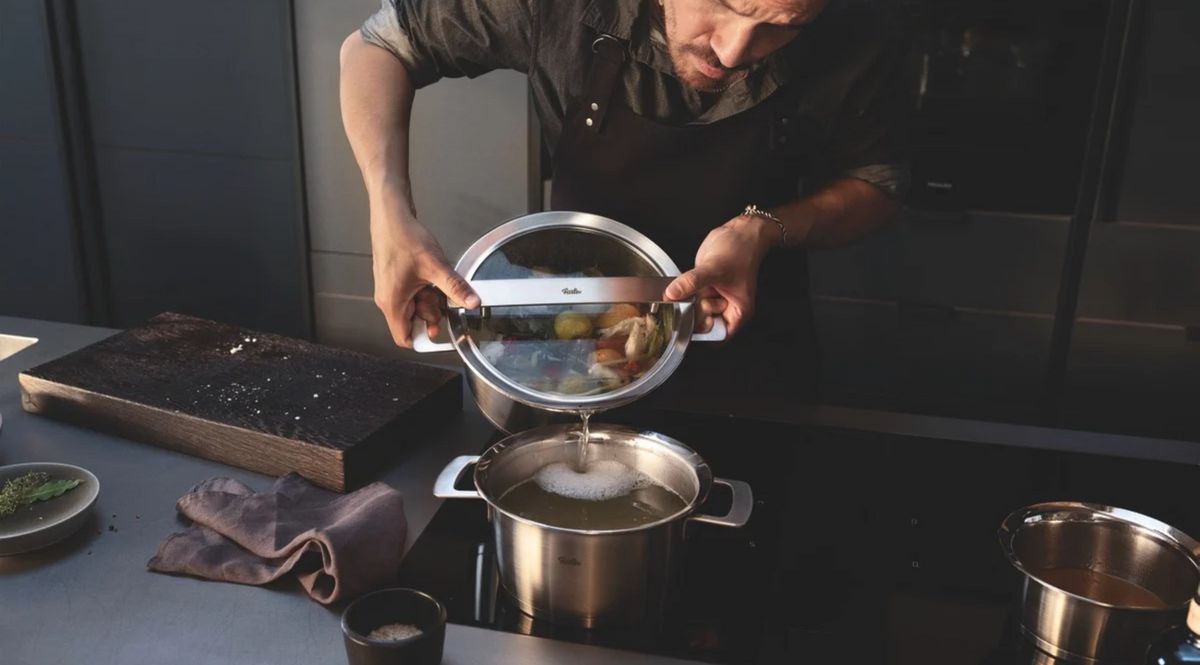
A person in a grey apron lifts the glass lid from a steaming Fissler stainless steel pot on a sleek black stovetop, showcasing German-made precision and innovation as condensation drips from the expertly engineered lid.

The quality of good induction pots lies in the details

A high-quality pot rarely draws attention to itself. Its quality shows not in flashy details or technical buzzwords, but in an effortless ease that quickly becomes second nature as you cook. 

Heat spreads evenly. Temperatures can be controlled precisely. Nothing burns unexpectedly, and nothing cooks faster than the rest. The pot works quietly, and that is exactly where its strength lies. 

To identify high-quality induction pots, look for a few key features: 

  • even heat distribution 
  • good heat retention 
  • a base that resists warping over time 
  • high-quality materials 
  • careful craftsmanship 

None of these features stands alone. It is how they work together that determines how precise, efficient and enjoyable your cooking will be.

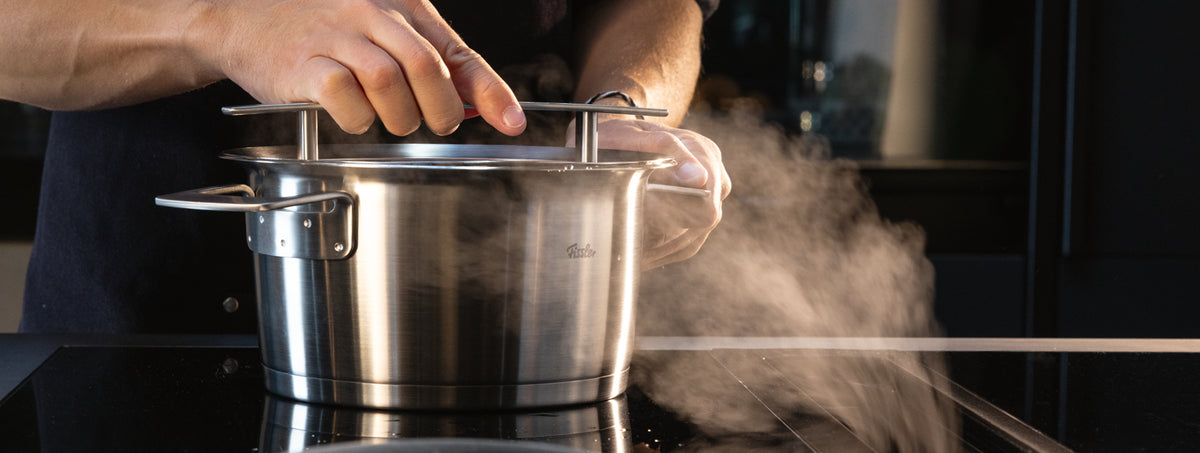
A person lifts the lid off a steaming Fissler stainless steel pot on a plain black stovetop in a modern kitchen.

Why good heat retention changes the way you cook

Almost every induction pot heats up quickly these days. What matters is what happens next. 

A high-quality pot base stores the heat it absorbs and releases it steadily. This often lets you turn down the heat before cooking is complete, without disrupting a gentle simmer. 

The difference is especially noticeable with soups, stews and slowly reduced sauces. Rather than needing constant adjustments, the pot keeps cooking with its stored heat. The temperature stays even, ingredients cook at a controlled pace and the whole process feels almost effortless. 

It is often these understated qualities that set high-quality cookware apart. Not because they demand your attention, but because they make it unnecessary.

Sandwich Base or Multilayer Material: What's the Difference?

If you take a closer look at high-quality cookware, sooner or later you'll come across terms like sandwich base or multi-ply material. Both constructions have proven themselves over many years. What matters most, however, is not what they're called, but how well they're made.

A chef in a gray uniform lifts the lid of a premium Fissler stainless steel pot on a stove, showcasing precision engineering and timeless German design while checking the ingredients inside.

Sandwich base

Cookware with a sandwich base has a stainless steel body and an aluminium or copper core built into the base. The core absorbs heat quickly and distributes it evenly across the entire base. A high-quality sandwich base offers:

  • fast heat absorption
  • even heat distribution
  • good heat retention
  • excellent resistance to warping
In a modern kitchen, a person in a dark chef's jacket stirs the Fissler M5 Pro-Ply® saucepan with metal lid, made from recycled stainless steel for induction use. Beside it stands another Fissler pot. Both reflect Fissler's 1845 tradition and are dishwasher-safe, making the

Multilayer material

Multi-ply cookware is made by permanently bonding several layers of metal together. This distributes heat not just across the base, but right up the sides of the pot. 

Delicate ingredients in particular benefit from this exceptionally even heat distribution. Heat reaches not just the point where it is generated, but wherever it is needed as you cook.

Fissler Pure Collection® pots and Ceratal® Evo Comfort Pan 24 cm on a black induction hob; modern kitchen, fresh herbs, vegetables.

Material quality only becomes apparent over time

Some qualities are obvious straight away. Others only reveal themselves after many years. Stainless steel is one of the most popular materials for high-quality cookware for good reason. It is robust, hygienic and durable—qualities that often matter more in everyday cooking than a particularly striking design. 

But material alone does not make a good pot. Only the combination of high-quality stainless steel, precision craftsmanship and a thoughtfully designed base ensures that cookware performs reliably over time. 

Many signs of quality therefore become apparent not when you unpack your cookware, but in everyday use. When handles remain securely attached even after years. When the base stays flat on the cooktop. When you can control temperatures just as precisely as on day one.

Why induction pots sometimes hum


A quiet hum or buzz is perfectly normal when cooking with induction. It is caused by slight vibrations in the base of the pot within the magnetic field. How noticeable the sound is depends on the hob, the power setting and the base construction. A high-quality, warp-resistant base can reduce vibrations, but a slight operating noise is not a quality defect. 


A woman smiles in a modern kitchen and cooks with the Fissler Pure Collection Cooking Pot with Metal Lid, known for quality Made in Germany.
Elegant white plates are stacked above a Fissler Phi Collection® saucepan, showcasing timeless German-made design in a dark kitchen cabinet.

The Right Pot Size for Induction

Material and base construction aren't the only factors that affect your cooking results. Pot size also plays a role in how efficiently an induction hob works. Here's what to look for: 

  • Choose the right cooking zone: The base diameter should match the size of the cooking zone as closely as possible. 
  • Avoid pots that are too small: They don't make full use of the hob's power. 
  • Use a range of pot sizes: There's rarely a one-size-fits-all solution for small batches of sauce, vegetables or slow-cooked dishes. Having different pot sizes lets you handle every cooking task efficiently and comfortably.

More inspiration & tips from the professional kitchen

Master your stovetop and discover the versatility of uncoated stainless steel. We share our best kitchen secrets, product insights, and inspiration to help you hone your cooking skills.